


With years of industry experience, we at Linear Kitchen Design bring expert knowledge and trusted craftsmanship to every project. We specialise in bespoke kitchen design, cabinetry, worktops and appliance integration, creating stylish, practical kitchens tailored to each homeowner’s needs.
You’ve probably heard the argument before: a kettle is cheaper, while a Quooker is all about convenience. But is that really the full story?
Quick answer: When you compare Quooker vs Kettle, running costs depend on how often you boil water, how much you heat at a time, and how efficiently you use your kitchen.
Planning a new kitchen also means thinking about how appliances fit into the bigger picture. We at Linear Kitchen Design can help you plan your layout, integrate appliances and create a kitchen that suits the way you actually live.
So, does a Quooker really cost the same to run as a kettle? Let’s look at the practical differences.
Quooker vs Kettle: Which One Really Saves You Money?
Quooker vs Kettle: How Do They Work?
A kettle heats water from cold whenever you switch it on. Once the water reaches the boiling point, the kettle usually switches off automatically.
A Quooker takes another approach. Its boiling-water tank sits beneath the worktop and stores hot water, ready to dispense through the tap when needed. The tank is insulated to help retain heat, although electricity is still required to maintain the water temperature.
That creates an interesting comparison. With a kettle, you use more energy in short bursts. With a Quooker, you have a small ongoing energy requirement to keep water ready. Neither approach automatically wins.
How Much Does a Kettle Cost to Run?
Electric kettles can be surprisingly efficient, particularly when you boil only the amount of water you need. The problem is that many people don’t.
Imagine making a single cup of tea. You fill the kettle, perhaps without checking the water level, and end up heating enough water for three or four cups. The unused water cools down, and the cycle repeats later.
This can increase kettle energy consumption over the course of a day.
Your kettle’s running cost will depend on:
- How much water you boil
- How frequently you use it
- The kettle’s power rating
- Your electricity tariff
- Whether you reboil leftover water
A simple habit can make a difference: measure the water using your mug before switching the kettle on.
How Does a Quooker Use Energy?
A Quooker is designed to keep a supply of boiling water available in an insulated tank.
That means you don’t have to wait several minutes for cold water to heat up whenever you need it. However, the system does use electricity to maintain the stored water at the required temperature.
This is where Quooker running costs can be misunderstood.
Some people assume that because a Quooker is always ready, it must constantly consume large amounts of electricity. In reality, its insulated tank is designed to minimise heat loss, so the system doesn’t simply run at full power all day.
The exact energy use varies depending on the model, tank size, temperature, and the amount of boiling water you use.
Quooker vs Kettle Running Cost: Which Is Cheaper?
Here’s the tricky part. There isn’t one universal answer to the question, “Is a Quooker cheaper than a kettle?”It depends on your habits.
If you’re a light kettle user who boils a carefully measured amount once or twice a day, a kettle may have the lower running cost. But what about a busy family?
Perhaps the kettle goes on several times before breakfast. Then again at lunchtime. Then for afternoon tea. Add cooking and several evening drinks, and you’re repeatedly heating water throughout the day.
In that situation, a Quooker can be particularly appealing because boiling water is available immediately and you don’t need to keep switching between filling and boiling.
Don’t Forget the Upfront Cost
Running costs are only one part of the decision. A kettle is relatively inexpensive. If it eventually fails, replacing it doesn’t usually require much planning.
A Quooker is a more significant investment. You’ll need the tap, tank and installation, and the total cost will depend on the model and configuration you choose.
So, even if a Quooker works efficiently for your household, it’s unlikely to make financial sense if you’re expecting electricity savings alone to quickly recover the purchase price.
Most homeowners choose a Quooker for the complete package: convenience, functionality, aesthetics and everyday usability.
It’s much like investing in quality kitchen cabinetry. You aren’t simply buying a product; you’re improving how the room works.
Could a Quooker Reduce Water Waste?
There’s another point worth considering: water usage. With a kettle, overfilling is incredibly easy. You might need one mug but boil half a kettle. The remaining water eventually gets discarded or reheated.
A boiling-water tap allows you to dispense water directly when needed. That can encourage more controlled usage.
It won’t automatically make every household more water-efficient, but your habits matter.
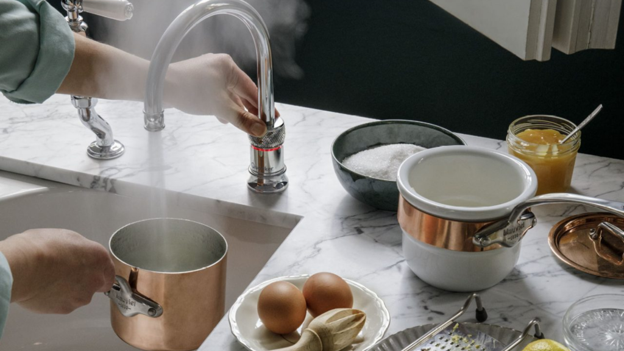
And when you’re preparing food, the convenience becomes even more noticeable. Filling a pan with boiling water directly from the tap can save time when cooking pasta, vegetables or other meals.
Is a Quooker Better for a Modern Kitchen?
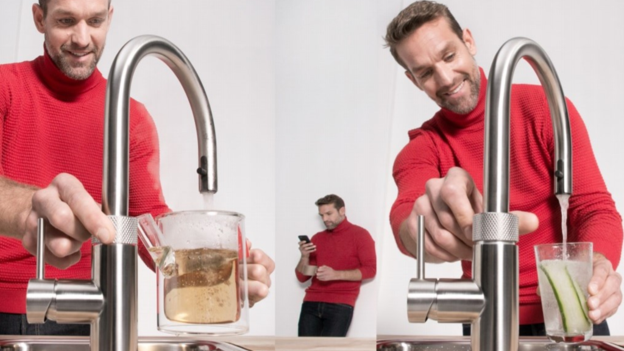
For many homeowners, the biggest advantage isn’t the energy bill. It’s convenience.
Think about a typical evening. You’re cooking dinner, the children want drinks, and you’ve got a saucepan waiting to be filled. The last thing you need is another appliance competing for space on the worktop.
A Quooker combines several functions into one streamlined tap system, depending on the configuration.
It can also contribute to a cleaner kitchen aesthetic by reducing reliance on a countertop kettle.
At Linear Kitchen Design, we can help you decide where to place a Quooker or another boiling-water system in your kitchen layout. We consider available cabinetry space, worktop positioning and how you’ll use the kitchen every day.
Final Words
So, when it comes to Quooker vs Kettle, which one wins? The answer depends on your lifestyle. A carefully used kettle can be economical for occasional use, while a Quooker offers instant boiling water and greater convenience for households that use it regularly.
Rather than choosing purely based on running costs, consider how you use your kitchen every day.
Ready to give your kitchen an inspirational appearance? We at Linear Kitchen Design can help you make those decisions with confidence. We offer kitchen taps and sinks from top brands, including Blanco, Franke, The 1810 Company, Quooker, Perrin & Rowe, Clearwater, and Bidbury, which ooze style and innovation.
Contact Linear Kitchen Design today and explore our range of Quooker taps on the Isle of Wight and choose one that matches your decor and budget!
FAQs About Quooker Taps on the Isle of Wight
Is a Quooker cheaper to run than a kettle?
Not necessarily. A kettle uses electricity when heating water, while a Quooker uses energy to maintain its stored boiling water. Your usage habits have a significant effect on the overall running costs.
Does a Quooker use electricity constantly?
A Quooker uses electricity periodically to maintain the temperature of its stored boiling water. Its insulated tank is designed to reduce heat loss and minimise unnecessary energy use.
Is a kettle more energy efficient?
A kettle can be very efficient when you boil only the amount of water you need. However, repeatedly overfilling and reheating water can increase energy consumption.
Is a Quooker worth the investment?
For households that frequently use boiling water, the convenience and streamlined design may make it worthwhile. However, the higher upfront cost should be considered alongside the long-term benefits.
About the Author:
Written by the team of Linear Kitchen Design, kitchen professionals with hands-on experience in creating stylish, practical kitchens. From bespoke layouts to smart appliance integration, their expert insights help homeowners make confident choices and design kitchens that work beautifully every day.