


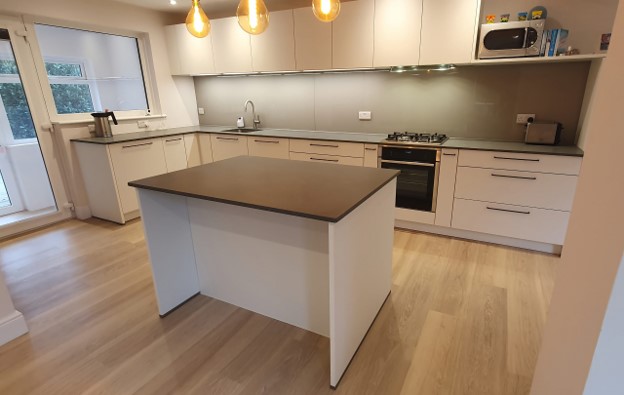
Choosing a new worktop can feel surprisingly overwhelming. Spend enough time browsing inspiration photos, and you’ll quickly notice one material appearing again and again, and that’s quartz. But is it really the right choice for your home?
Let’s take a look at the pros and cons of quartz worktops to make the right decision for your Isle of Wight kitchens.
At Linear Kitchen Design, we have a highly skilled team of kitchen worktop installers who install your chosen surface with meticulous precision and care, ensuring a perfect fit and flawless finish.
In this blog, we’ll explore the pros and cons of quartz worktops to help you decide whether this increasingly popular surface deserves a place in your dream kitchen.
Pros and Cons of Quartz Worktops: Finding the Perfect Surface for Your Kitchen
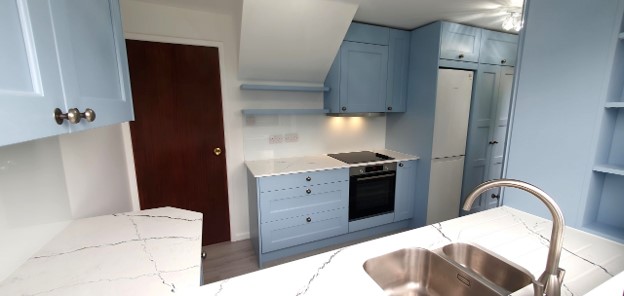
The Pros of Quartz Worktops
1. Exceptional Durability
Life happens in the kitchen. Pans get dropped. Children spill drinks. Dinner prep becomes chaotic. A good worktop needs to withstand everyday family life, and quartz excels in this area.
Because it’s engineered from natural quartz combined with resins, the material is incredibly hard-wearing.
Benefits include:
- Scratch resistance
- Excellent strength
- Long lifespan
- Resistance to chips and cracks
Many homeowners find that quartz still looks stunning years after installation.
2. Low Maintenance
One of the biggest advantages often cited in discussions of the pros and cons of quartz worktops is their ease of maintenance. Unlike some natural stones, quartz doesn’t require sealing.
Cleaning is usually straightforward:
- Warm water.
- Mild detergent.
- Soft cloth.
3. Stunning Appearance
Quartz offers remarkable design flexibility.
Popular options include:
- Marble-inspired patterns
- Contemporary matt finishes
- Crisp white surfaces
- Dramatic dark tones
- Concrete-effect styles
Because colours and patterns are engineered, the overall appearance tends to be more consistent than natural stone.
This makes quartz particularly attractive for handleless and contemporary kitchens.
4. Hygienic Surface
Quartz is non-porous, meaning it doesn’t absorb liquids easily.
This makes it:
- More hygienic
- Stain-resistant
- Easier to clean
- Ideal for busy family kitchens
For homeowners who love cooking, this practical advantage can make everyday life noticeably easier.
The Cons of Quartz Worktops
No material is perfect, and understanding the drawbacks is equally important.
1. Higher Initial Cost
Quartz sits within the premium end of the market. Compared with laminate surfaces, the upfront investment is higher.
However, many homeowners view this as a long-term investment because of its durability and timeless appeal.
2. Heat Resistance Has Limits
Quartz is highly durable, but it isn’t completely heat-proof. Placing extremely hot pans directly on the surface may damage the resin.
To protect your investment:
- Use trivets
- Avoid direct heat exposure
- Place hot cookware on heat-resistant mats
These simple habits can help maintain the surface for decades.
3. Professional Installation Is Essential
Quartz is very heavy because of its weight and precision requirements. Professional installation is vital.
Incorrect fitting can lead to:
- Structural issues.
- Uneven joints.
- Potential cracking.
This is why working with experienced kitchen specialists makes such a difference.
Quartz vs Granite: Which Is Better?
This question comes up regularly. The answer? It depends on your priorities.
Quartz May Be Better If You Want:
- Low maintenance
- Consistent colours
- Contemporary styling
- Excellent stain resistance
Granite May Be Better If You Prefer:
- Unique natural patterns
- Greater heat resistance
- Organic textures
Many modern homeowners lean towards quartz because of its practicality and elegant appearance.
Is Quartz Right for Family Kitchens?
In many cases, absolutely. Quartz is particularly suited to households that want:
- Durability
- Easy cleaning
- Timeless aesthetics
- Minimal maintenance
- Long-term value
Whether you’re preparing school lunches or hosting weekend gatherings, quartz performs exceptionally well under daily use.
Practical Tips Before Choosing Quartz
Before making your final decision, consider the following:
- View Samples in Natural Light: Colours can appear different under showroom lighting.
- Match the Worktop to Your Lifestyle: Busy families often benefit from lighter patterns that disguise crumbs and fingerprints.
- Think Long-Term: Trends come and go. Neutral tones often remain timeless.
- Work with Experienced Designers: Proper planning ensures your worktop complements cabinetry, appliances, and the overall layout.
Final Thoughts
Understanding the pros and cons of quartz worktops is essential when planning a new kitchen. While they represent a premium investment, their durability, low maintenance requirements, and timeless beauty make them one of the most popular choices for modern homes.
Whether you prefer the timeless elegance of granite, the modern appeal of quartz, or the warmth of timber, our experts at Linear Kitchen Design ensure your worktops not only look stunning but also perform exceptionally well for years to come.
Contact Linear Kitchen Design Today, discover how we can help create a kitchen that’s stylish, practical, and built around the way you live.
FAQs About Pros and Cons of Quartz Worktops
Are quartz worktops worth the investment?
Yes, although they have a higher upfront cost, their durability, low maintenance, and long lifespan make them an excellent long-term investment.
Do quartz worktops stain easily?
No, because quartz is non-porous, it resists staining far better than many natural stone surfaces.
Can hot pans be placed directly on quartz?
It’s best not to. Using trivets or heat-resistant mats helps prevent thermal damage.
How long do quartz worktops last?
With proper care, quartz worktops can last for several decades while maintaining their appearance and performance.